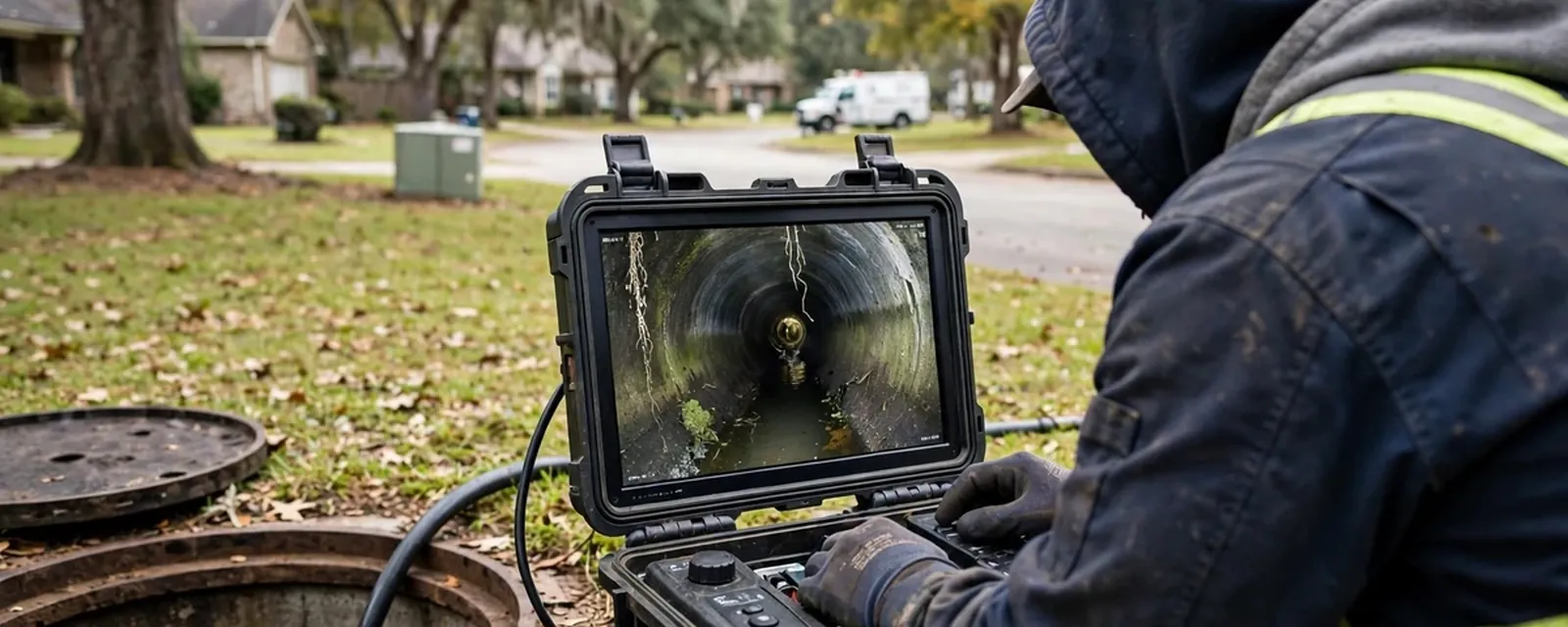
Cured-in-place pipe lining, often shortened to CIPP, works like a new pipe inside the old one. A flexible liner soaked in resin is pulled or inverted into the damaged sewer line, then hardened in place. The result is a smooth, joint free pipe that seals cracks and keeps roots out.
People ask what it costs, and the honest answer is that we cannot name a number without seeing the pipe. What we can do is explain what drives the price, so you know what a fair quote includes.
What goes into the price
Length of pipe to line
The liner is sized and cut to the run you need. A short section under a driveway costs less in material and labor than a full lateral from the house to the main.
Pipe diameter
A four inch house line and a six inch line use different liners and different equipment. Larger diameters take more material and more crew time.
Access points
Lining needs a cleanout or an opening to feed the liner in. If your lateral has no usable cleanout, one may need to be installed first, and that is its own small project.
Condition before lining
The pipe has to be clean and clear. Heavy roots, scale or sagging sections need cleaning, cutting or hydro jetting before the liner goes in, and that prep adds time.
Bends, offsets and connections
Sharp bends, offset joints and side connections make the liner harder to place. Connections that tie into the lateral have to be reopened after the liner hardens.
Camera first, always
Nobody should quote a lining job without a camera inspection. A video look inside the pipe shows cracks, root intrusion, offsets, belly sections where water sits, and collapsed spots. It also lets you see the problem with your own eyes instead of taking someone's word.
The recording becomes your reference for every later decision. It supports a lining plan, shows whether lining is even possible, and gives you evidence if you need to talk with the city.
When lining works and when it does not
Lining suits pipes that are mostly intact. Cracks, leaking joints, small root entry points and rough pipe walls are good candidates. The liner is a snug fit and the repair reaches the whole run.
Lining does not fix a pipe that has collapsed, separated at a joint, or developed a major belly that holds water. A liner follows the shape it is placed in, so a sag stays a sag. In those cases, digging or a replacement method is the right answer.
| Pipe condition | Lining a good fit? | Why |
|---|---|---|
| Hairline cracks and leaking joints | Yes | Liner seals the whole run |
| Root intrusion at joints | Yes, after cutting roots | Smooth liner keeps roots out |
| Rough or scaled old pipe | Often | Clean first, then line |
| Collapsed or crushed section | No | Needs excavation |
| Large belly with standing water | Usually no | Liner follows the sag |
| Severe offset at a joint | Sometimes | Depends on the gap and camera view |
Lining compared with digging
A trench repair opens the ground, removes the old pipe and sets new pipe. It is the more disruptive route, but it fixes everything, including bellies and collapses. Lining leaves your landscaping and driveway mostly intact, and it can be faster.
Neither is cheaper in every case. Cost depends on length, depth, what sits on top of the pipe and how hard it is to dig. A short, deep pipe under a patio may favor lining, while a shallow, collapsed pipe in an open yard may favor a trench. Our sewer line repair page explains both approaches.
What shapes the cost of a lining job
No two lateral lines are alike, so no honest quote starts before the camera. These factors do most of the work in a price.
Length and diameter
More pipe and bigger pipe mean more liner and more time.
Cleaning and prep
Roots, scale and debris must be cleared before lining.
Access
A missing cleanout may need to be added first.
Connections and bends
Reopening side connections and handling offsets takes skilled labor.
Permits and inspection
City inspection or permit steps can add to the schedule.
Insurance may or may not cover sewer lateral work. Check your policy, and we will give you a clear price before any work starts.
Millbrae sewer laterals: who owns what
Millbrae's sewer system is owned by the city, and Municipal Code Chapter 8.20 spells out who looks after which part. The property owner builds, maintains and clears the lateral on their own lot. The city maintains only the stretch between the cleanout wye and the main, and only when the cleanout is in the designated location. That ownership line decides who pays when the pipe fails.
The code also says roots in a private lateral are the owner's problem. When the city requires root removal, the owner has 120 days after notice to remove roots and repair the pipe so they do not come back. Lining is one way to meet that kind of repair, since a smooth liner keeps roots out, though you should confirm the approach with Public Works.
Other sections of the code tie into lining work. A building permit that adds fixtures or enlarges the building by more than 25 percent can require a camera inspection of the lateral. A lateral sold with a house older than 20 years has also been subject to test and repair rules, so check current status with Public Works before relying on that. Permits may apply, and the Millbrae Building Division handles plumbing permits.
Questions to ask before you sign
Ask for the camera footage and a plain description of what the camera found. Ask which sections will be lined, how the liner will be cleaned and cured, and how connections will be reopened. Ask whether a cleanout will be added and where.
Ask what happens if the liner cannot be placed because the pipe is worse than expected. A good contractor explains the fallback before starting, not after. And ask what the city may need to see, since a lateral is a regulated part of the sewer system.
DIY or professional
DIY or what people try
- Pouring chemicals down the drain to chase roots
- Renting a drain machine and forcing it through a damaged pipe
- Buying a patch kit and applying it blind
- Putting off a camera look because the drain still works
Professional approach
- Inspecting the line on camera and recording the findings
- Cleaning roots and scale before lining
- Choosing lining or digging based on what the camera shows
- Handling cleanouts, connections and city requirements
Slow drains and gurgling toilets can mean a damaged lateral
Call the 24/7 line if drains back up. We start with a camera look so you see what the pipe needs before anyone discusses a price.
Where to start
Start with a camera. Our sewer inspection service gives you a recorded look inside the lateral so lining, digging or simple cleaning becomes a clear choice instead of a guess. If the camera shows a repairable pipe, our crew can walk you through the lining plan and the Millbrae requirements around it.
We cover Millbrae and neighboring areas, and our Burlingame plumbing page and the service area overview list where we work. If a sewer backup has already started, call the 24/7 line and shut off water use in the house.
Pipe lining questions
Manufacturers and installers cite long service lives for cured liners, but the number depends on the resin, the prep and the pipe condition. We do not promise a figure. Ask for the product documents for the exact liner.
Slightly, because the liner sits inside the old pipe. The smooth wall often moves water as well as the old pipe did, or better. The camera and your installer should confirm that the finished size still suits the flow.
Yes, after the roots are cut and cleared. A liner seals the openings roots used to enter, which helps keep them out. If roots have broken the pipe apart, digging may be needed.
Permits may apply, and the Millbrae Building Division handles plumbing permits. Lateral work also touches Chapter 8.20 of the municipal code. Call us and we will explain how we handle it for your address.
Not always. Lining avoids trench work, but prep, access and connections add cost. A short, shallow, collapsed pipe may be simpler to dig. A camera inspection shows which route fits.
Only a small part. Under Municipal Code Chapter 8.20 the owner maintains the lateral on their lot, and the city maintains the section between the cleanout wye and the main when the cleanout is in the designated spot.
Sources and standards: Millbrae Municipal Code chapter 8.20 on sewer laterals. The California Plumbing Code (based on the Uniform Plumbing Code). The Millbrae Building Division for permits. Cost figures are not quoted because they depend on the job.