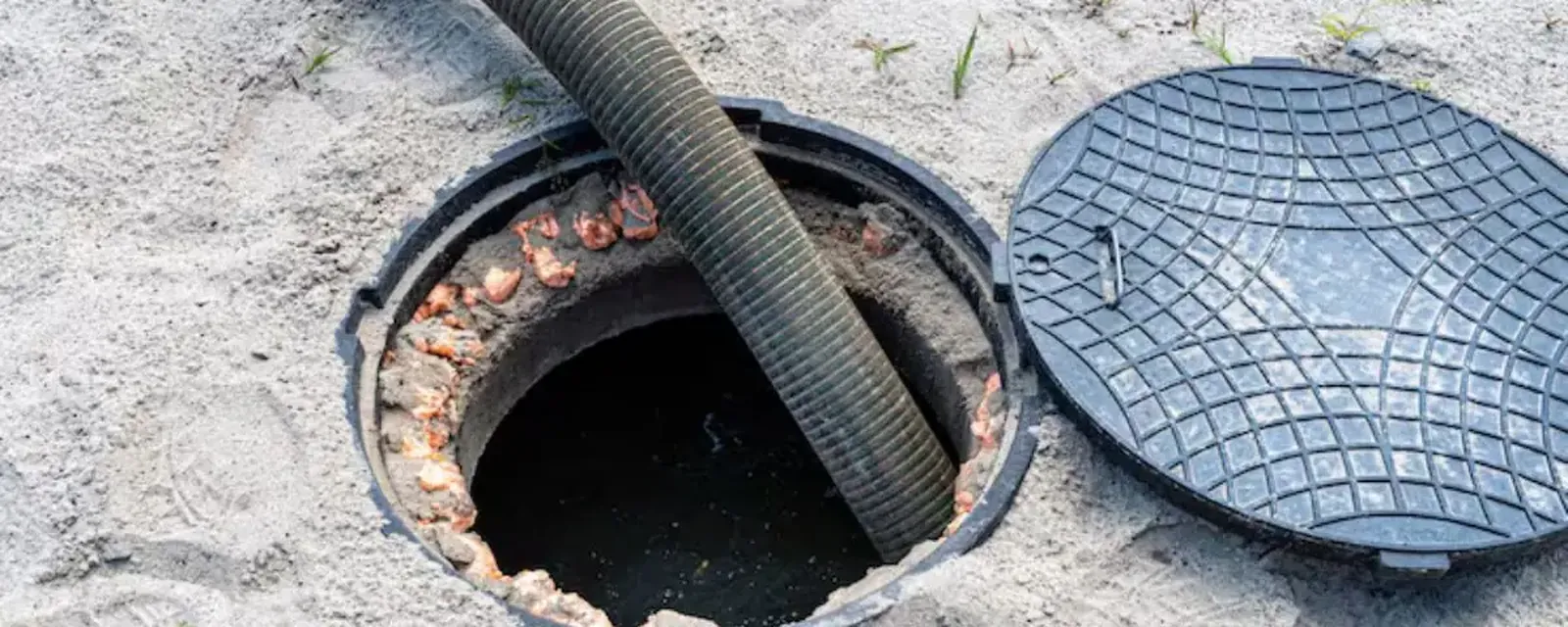
A sewer camera inspection is the quickest way to learn the true state of the pipe between your house and the city main. A small camera on a flexible cable is fed in through a cleanout, and we watch the pipe on a monitor as it travels. Cracks, offsets, roots, grease and standing water show up on screen, and a locator on the surface marks where and how deep each one is.
People book it for different reasons. Some want an answer after repeated clogs, some are buying or selling a house, and some are about to remodel and need to know the pipe will survive the project. The video is the same in all three cases, but what you do with it differs.
What the camera can and cannot show
The camera shows the inside of the pipe, and it is very good at that. It cannot show how the pipe is supported in the soil outside it, and it cannot see past a full blockage. If a line is packed with debris, we may need to clear it first, and that is where sewer line cleaning comes in.
Root intrusion
Fine roots at joints appear as white threads or a thick mat. The camera shows whether the roots enter at a joint or through a crack, which decides the repair.
Cracks and breaks
A crack shows as a dark line, a broken pipe as an opening with soil behind it. We note the distance from the access point so the spot can be found again.
Offsets and sags
Joints that no longer line up, or low spots that hold water, show on the video. A pool of water in a section that should be dry is the sign of a belly.
Scale and corrosion
Older cast iron may be rough, flaking or narrowed. The camera shows how much opening remains and how thin the wall looks.
Grease and debris
Grease clings to the wall in a coating, and debris sits along the bottom. These point to a cleaning plan, not necessarily a repair.
How an inspection visit goes
Find the cleanout
We locate the cleanout near the house or the sidewalk. If the line has no cleanout, we tell you the best alternative and recommend one.
Run the camera
The camera travels toward the main while we watch and record. We note the pipe material, the joints and any defect along the way.
Mark depth and distance
A locator on the surface marks where the camera head is and how deep it sits. This tells us where a repair would need to be and what it would disturb.
Review the footage with you
We play back the video and show what each finding means in plain terms. You get the recording to keep for your records or your agent.
When a camera run is required in Millbrae
Millbrae's municipal code ties camera work to certain moments. Before a building permit that adds plumbing fixtures or alters more than 25% of a building's area, the code calls for a CCTV inspection of the lateral by a licensed plumber or sewer contractor. The pass criteria include no roots or obstructions, tight joints, cleanouts, a design life of 25 or more years, and a backwater valve and relief valve. Defects found are to be repaired within 90 days.
The code also has a rule for property sales. Where buildings are more than 20 years old, the lateral must be tested and repaired before title transfers, unless it passed a test within the past 5 years or was fully replaced within 20 years and the city accepted it.
That rule depends partly on a consent decree whose stated end date has passed, so confirm with Public Works whether it is being applied to your sale. The cost of testing and repair falls on the owner.
Millbrae specifics for inspection
Millbrae owns its sanitary sewer system and treats the flow at the city's Water Pollution Control Plant. Your lateral is yours from the house to the main, apart from the short piece between the cleanout wye and the main that the city maintains when the cleanout is in the designated location. A camera run shows whether trouble sits on your part of the line.
The city's own Sewer Modernization page describes the collection system as in need of significant repair and rehabilitation, and says it is inspecting pipes and house laterals. A recorded camera run on your lateral gives you a baseline of its condition if the city contacts you. Millbrae permits for plumbing work go through the Building Division, and permits may apply to repairs the footage leads to.
A large share of Millbrae housing dates from the 1950s boom, when dwelling units rose from 2,783 in 1950 to 4,803 in 1960. Laterals from that era are the ones most likely to show roots and joint trouble on camera.
Inspection compared with other ways of checking
| Option | What it tells you | Limit |
|---|---|---|
| Camera inspection | The pipe's inside condition with video | Cannot pass a full blockage |
| Running water and watching drains | Whether flow is slow | Does not say why |
| Cable or snake | Whether a clog moves | Gives no view of the pipe wall |
| Smoke or dye testing | Where a line leaks to the surface | Cannot show pipe condition |
What affects the cost of a camera inspection
What changes the price of a sewer inspection
The visit is priced on how much pipe there is to review and how easy it is to reach.
Access to the line
A good cleanout is quick, and no cleanout means more setup.
Length of the line
A longer run to the main takes more time.
Locating and marking
Depth and surface marking add to the visit.
Cleaning first
A line with heavy buildup may need clearing before the camera can pass.
Recording and review
Footage and a walkthrough are part of the visit.
Call the 24/7 line for a clear price before work starts. Inspection for a sale is paid by the owner under city code, so ask Public Works what your transaction needs.
Buying, selling or remodeling in Millbrae?
Tell us the reason for the inspection and the timeline. We will plan the camera run so the footage answers the question you actually have.
After the footage
If the camera shows a cracked, offset or root-filled section, the next step is usually sewer line repair. A line with only grease or debris may need hydro jetting to clean the wall before anything else. If the line is clear and in good shape, the footage is a record you can keep.
We carry out inspections across Millbrae and the nearby places on our service area page, including Burlingame. Our phone line is open 24/7 if you want to book or ask a question.
Sewer camera inspection questions
Many laterals can be run, located and reviewed in a single visit. A long line, a missing cleanout or heavy buildup adds time. We tell you what to expect when you call.
Yes. We play the footage back with you and explain each finding. Ask for the recording if you need it for a seller, a buyer, an agent or the city.
Yes. A locator on the surface follows the camera head, so we can mark the position and depth of the pipe and of any defect. That helps plan a repair with the least digging.
City code sets a testing and repair rule for sales of properties with buildings more than 20 years old. Whether it is applied now depends on a consent decree, so confirm with Public Works before relying on either answer.
The code calls for a CCTV inspection of the lateral before a permit that adds fixtures or alters more than 25% of the building area. Ask the Millbrae Building Division which applies to your project.
A full blockage, an offset or a collapse stops the camera. We note the distance reached, then discuss clearing the line or repairing a damaged section so the rest can be viewed.
The video is a factual record of what the pipe looks like. How it is used in a sale or with the city is up to you and the parties involved, and we are not giving legal advice.
Our phone line is open 24/7. Scheduled inspections are booked at times that work for you, and we can tell you what is available for your address when you call.
Sources and standards: Millbrae Municipal Code chapter 8.20 on sewer laterals. Including the camera inspection step tied to some building permits. The California Plumbing Code (based on the Uniform Plumbing Code).