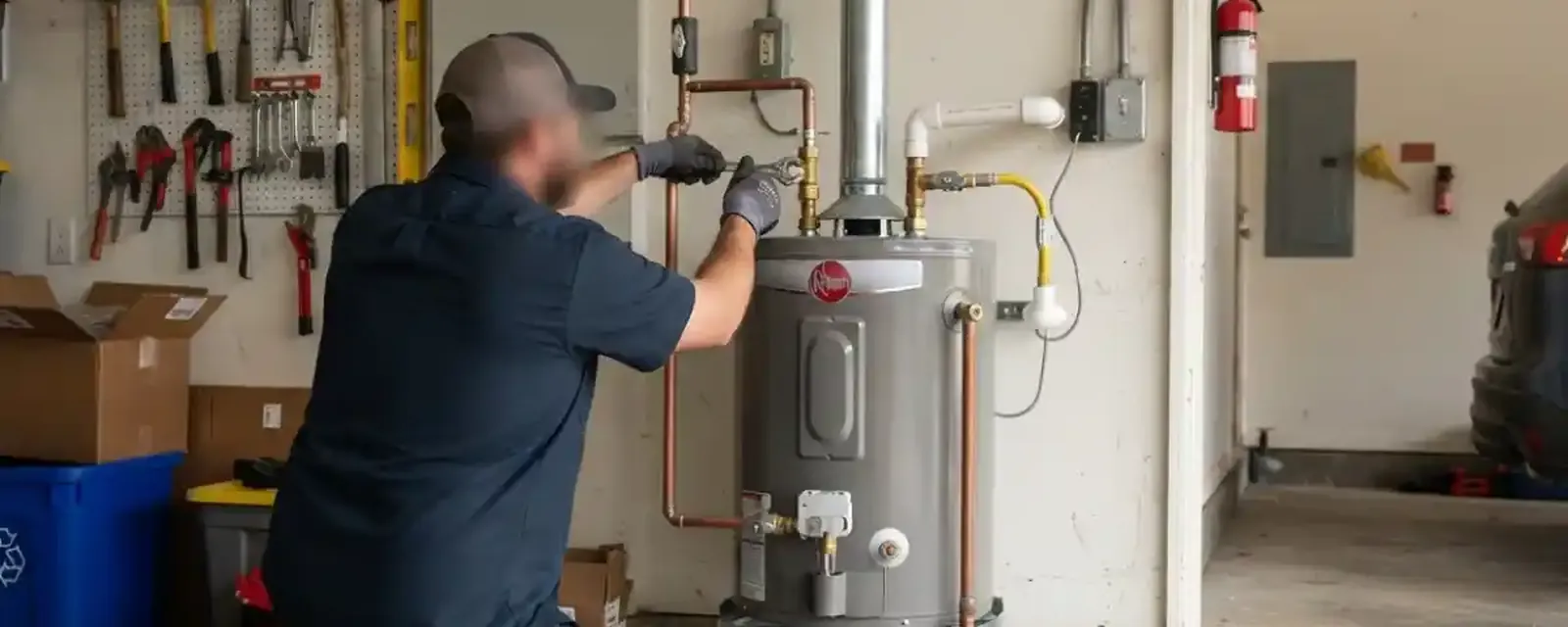
A hybrid water heater looks like a tall electric tank with a small unit bolted to the top. That unit is a heat pump. It moves warmth from the air around the tank into the water, and it falls back on ordinary electric elements when you ask for a lot of hot water at once.
Most people call it a heat pump water heater. The words "hybrid" and "heat pump" mean the same thing on the shelf, and the label on the unit will use one or the other.
How a hybrid heater makes hot water
The top of the unit holds a fan, a coil and a compressor, much like a small refrigerator running in reverse. Air passes over the coil, the coil collects heat, and that heat goes into the tank water. Because it moves heat instead of creating it, the unit uses far less electricity than a standard electric tank for the same hot water.
The heat pump works best at a gentle pace. When the tank runs low after back to back showers or a laundry day, the electric elements join in so you do not wait long. Most units also let you pick a mode, such as efficiency only, hybrid, or elements only for a stretch of heavy use.
What the space has to give you
A hybrid heater takes in air and puts out cooler, drier air. That makes the room matter more than it does for a normal tank. Manufacturers publish a minimum room volume or ask for ducting when the space is tight, and a closet with a solid door is the classic problem.
Air volume
The unit needs a room with enough open air to draw from, or ducts that bring air in and carry cool air out. A small closet with no vent will make the heater work harder and the room colder.
Height and clearance
Hybrid tanks are taller than the gas tank they replace because of the heat pump on top. We measure ceiling height, door width and the path to the spot before anyone orders a unit.
Condensate drain
Pulling heat from the air also pulls moisture, and that water has to go somewhere. A floor drain, a condensate pump or a line to a suitable drain handles it.
Electrical supply
Most hybrids want a dedicated 240-volt circuit. If you are replacing a gas tank, there may be no circuit at all, and your panel needs room for one.
Sound
The fan and compressor make a steady hum. A garage or utility room is usually fine, while a wall shared with a bedroom deserves a second thought.
Hybrid, standard tank and tankless side by side
Each type suits a different house. This table lists the practical points we check before recommending one.
| Point to check | Hybrid heat pump | Standard tank | Tankless |
|---|---|---|---|
| Energy source | Electric, heat taken from air | Gas or electric | Gas or electric |
| Needs open air in the room | Yes | No | Depends on venting |
| Condensate drain | Yes | No | Condensing gas models only |
| Recovery after heavy use | Slower, elements assist | Moderate | Continuous while running |
| Space footprint | Tall tank plus clearance | Compact tank | Wall mounted, small |
| Best fit | Roomy garage or utility space | Simple swap, tight budget | Small homes wanting endless hot water |
If you are weighing a hybrid against an on-demand unit, our tankless water heater page explains where that option fits and where it does not.
Questions to settle before you buy
Start with the electrical panel. A hybrid heater needs its own circuit, and an older panel may be full or already near its limit. An electrician may be needed for that part, and knowing early keeps a surprise out of the project.
Then look at how your household uses hot water. A family that runs the shower, the dishwasher and the washer in one morning needs a larger tank than two people who spread usage over the day. Tank size, not the heat pump, decides whether anyone gets a cold shower.
Finally, think about where the cool air goes. In a garage that sits on the cold side of the house this is a bonus. In a closet next to the kitchen it can become an annoyance.
Millbrae water, strapping and Bay Area rules
Millbrae buys all of its water from the San Francisco Regional Water System, and the city's own 2025 water quality report lists hardness between 8.1 and 112 ppm with an average of 62 ppm. By common scale that is on the soft side, so scale buildup inside a tank is slower than in hard water towns. A regular tank flush still keeps the drain valve working and catches sediment early.
The same report shows the water is treated with chloramine. Chloramine is why we pay attention to the rubber and plastic parts in any new tank, and it is one more reason to have the anode and fittings looked at on a schedule instead of waiting for a leak.
California law requires new and replacement water heaters to be braced, anchored or strapped against earthquake movement, and that applies to a heavy hybrid tank with a unit on top as much as to any other. Bay Area air district rules on new water heaters are also changing, so ask us what applies to your replacement before you pick a model. Permits may apply, and the Millbrae Building Division handles plumbing permits.
What we do and what you can handle yourself
You can learn a lot on your own: read the label on your current tank, check the age, note the size, and look at what is around it. Cleaning the air filter on a hybrid unit, if it has one, is also a homeowner job.
DIY or what people try
- Ordering a hybrid unit online and hoping it fits the closet
- Running a new circuit without checking panel capacity
- Pointing the condensate line at a spot that cannot drain
- Skipping seismic strapping on a heavy tank
Professional approach
- Measuring room volume, height and the path to the spot
- Checking the panel and the circuit before choosing a model
- Setting up drainage and strapping to the plumbing code
- Pulling a permit where one applies and testing the unit before we leave
Costs without the guesswork
What shapes the price of a hybrid install
A hybrid heater costs more to install than a basic tank because of the extra parts around it. The bill follows a handful of clear factors.
Unit size
A larger tank costs more and may need a different footprint.
Electrical work
A new circuit or panel change adds a separate piece of work.
Drain and venting
Condensate lines, pumps and ducting depend on the room.
Removal and access
Taking out an old gas tank and getting a tall unit into place affects the labor.
Permit and code items
Strapping, permits and any shutoff or relief valve updates are part of a proper job.
Some local electric programs may offer incentives for switching, but eligibility and amounts change. Ask us before you buy and we will point you to the right place to check.
Not sure a hybrid fits your house?
Describe the room and the panel to us, and we will tell you plainly whether a hybrid makes sense or whether another type suits you better.
Putting it together for your Millbrae home
If you have a roomy garage or utility space and room in the panel, a hybrid heater is worth a serious look. If the water heater lives in a closet with a solid door and no spare circuit, another type may be the better answer, and there is no shame in that.
Our water heater installation team handles the sizing, strapping and drainage side of a swap, and the same visit can cover the removal of the old tank. If you are in Burlingame and want the same help, our Burlingame plumbing page covers that area, and you can see the full Millbrae service area too. The 24/7 line is open if the old heater has already failed.
Hybrid water heater FAQ
Yes. Hybrid and heat pump describe the same kind of tank, an electric water heater with a heat pump on top and backup elements inside. Manufacturers use both words, so check the label for the actual model type.
Often, yes, but it is a bigger change than a tank swap. You need a 240-volt circuit, room for the extra height, a condensate drain and a gas line that is safely capped. We check all of that before quoting.
It hums, mostly from the fan and compressor. In a garage or utility room most people stop noticing it. A closet on a bedroom wall is the placement to think twice about, and some models offer a quieter mode.
Slower than a gas tank, because the heat pump works at a gentle pace. The built in elements speed things up when the tank runs low, so most households switch modes occasionally and otherwise forget about it.
Millbrae water is on the soft side, with a 2025 average hardness of 62 ppm, so scale grows slowly. The water is chloraminated, so ask us to check fittings and the anode on a schedule. Our plumbing installation crew can do that during any visit.
The city's pages do not say plainly, so we do not guess. Permits may apply, and the Millbrae Building Division handles plumbing permits. Call the 24/7 line and we will tell you how we handle it for your address.
Sources and standards: California Health and Safety Code section 19211 on water heater bracing. The California Plumbing Code (based on the Uniform Plumbing Code). The Bay Area Air Quality Management District rules on new water heaters. Which are changing.