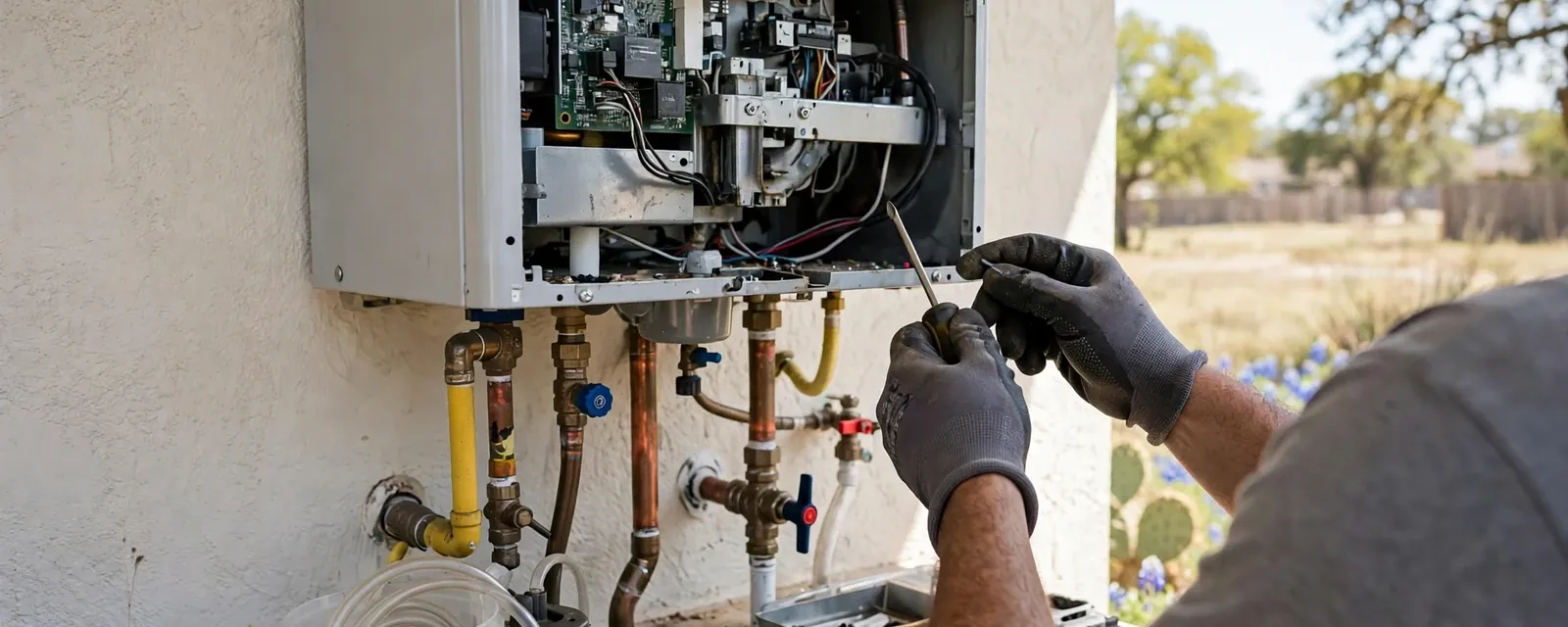
Why hot water takes so long to arrive
The wait at a tap has nothing to do with how hot your water heater is. The water heater could be doing its job perfectly while the pipe between it and the faucet is full of cold water left over from the last use. You have to push that cold water out before the hot water can travel down the line.
The farther a fixture sits from the heater, the longer the wait. A bathroom at the far end of the house, a kitchen on another floor or a laundry sink in an addition can all be a long run of pipe away. A larger pipe diameter makes the wait longer still, because there is more cold water to clear.
The goal of an instant hot water setup is to shorten or remove that wait. There are three common ways to do it, and the right one depends on the layout of the house, the fuel you have and how many fixtures are affected.
Three ways to get hot water faster
Point-of-use heater under or near the sink
A small heater is installed right at the fixture, either as a compact tank under the sink or as a small electric tankless unit. It heats water on the spot, so the trip from the main water heater no longer matters. This is the quickest fix for one distant sink and the least disruptive install.
Recirculation system
A pump keeps hot water moving slowly through a loop of pipe so the supply line stays warm. When you open the tap, warm water is already waiting. A recirculation pump can be controlled by a timer, a temperature sensor or a push button so it does not run all day.
Tankless water heater placed closer to demand
A tankless unit heats water as it flows, with no stored tank. Placing it close to the fixtures it serves cuts the run of pipe, and because it does not store water, it can supply hot water as long as the demand fits its flow rating. Whole-house tankless is a bigger project. Our tankless water heater page lists what these systems involve.
Comparing the options
| Option | Best for | What it needs | Main limit |
|---|---|---|---|
| Under-sink point-of-use | One kitchen or bath sink far from the heater | A nearby outlet or circuit, and a cold supply | Small output, covers one fixture |
| Electric tankless at the fixture | One shower or sink with steady use | Adequate electrical capacity and a dedicated circuit | Needs the panel to have room for it |
| Recirculation loop | Several fixtures on a long supply line | Pump, controls and often a return line | Adds energy use if left running constantly |
| Tankless near the demand | A new addition or remodel with a long pipe run | Gas line, vent or electrical service | Biggest install, and the most planning |
No option is automatically best. A one-bathroom house with one distant sink rarely needs more than a point-of-use unit, while a long two-story layout can justify a loop. We help you match the fix to the problem instead of selling the largest system.
What an install actually involves
Every instant hot water setup has a few common pieces. Knowing them ahead of time makes the quote and the schedule less mysterious.
Walk the layout
We look at the distance from the water heater to the fixture, the pipe size, the pipe route and where a pump, outlet or unit could be placed. That tells us which option fits and where the pipe will be tapped.
Check power, gas and space
Electric units need the right circuit and breaker. Gas tankless units need adequate gas supply and a proper vent. Even small point-of-use heaters need an outlet, a cold supply and clearance.
Install, test and tune
The unit is mounted, connected to water and power, and tested for leaks and temperature. For a loop, the pump controls are set so it runs when you need it and rests when you do not.
If your plan is to change or move the main heater itself, our water heater installation crew can walk the whole layout with you. Bring up any remodeling plans early, because opening a wall once is cheaper than opening it twice.
What older homes bring to the job
Houses that were built decades ago were often wired and piped for different demands than the ones we have today. A bathroom that was once a single fixture room may now host a rain shower, and a kitchen that once needed one sink now has a dishwasher and a second tap. These changes are what make the wait obvious.
Older electrical panels can also limit your choices. An electric tankless unit can draw a large load while it runs, so a panel with little spare capacity may call for a different option, such as a small tank heater or a recirculation loop. This is one reason we look at the panel before we recommend anything.
Hot water you waste while waiting
Running a tap for a minute to get warm water sends useful water down the drain. A recirculation loop or a point-of-use heater cuts that waste, but a pump that runs around the clock uses energy, so timers and sensors matter.
Millbrae specifics for a new hot water install
Permits and who handles them
In Millbrae, the Building Division issues building, plumbing, electrical and mechanical permits, and its counter is at 621 Magnolia Avenue. The city says a permit is needed to install, repair or modify plumbing, electrical or mechanical systems, but its pages do not spell out every water heater case. Permits may apply, so ask the Building Division, or ask us what applies to your install.
Instant hot water work often touches more than one trade, since a new circuit, a gas connection or a vent can each trigger review. If a permit is needed, a California contractor licence matters. The CSLB confirms C-36 plumbing licences, and its small minor-work exemption does not cover work that needs a permit.
Millbrae water arrives from the San Francisco regional system and is treated with chloramine. Hardness in the latest city report averaged 62 parts per million, which is on the softer side. Even so, small electric elements can collect scale over time, so ask us about flushing and descaling when a point-of-use unit is installed.
Doing it yourself versus calling a plumber
DIY or what people try
- Plugging in a plug-in point-of-use unit where an outlet already exists
- Insulating exposed hot water pipes where you can reach them
- Setting a timer on a pump that is already installed
- Running the tap longer and living with the wait
Professional approach
- Sizing the unit to the fixture and the incoming water temperature
- Adding a dedicated circuit, breaker or gas line where it is needed
- Venting and testing a gas tankless unit safely
- Confirming permits and finishing the work to code
Electrical and gas connections are where do-it-yourself work gets risky. If a gas smell ever appears near a heater, leave the building and call 911 and your gas utility before anything else.
Next steps
Start by noting which fixtures run cold the longest and how far they are from the heater. That one detail narrows the choice faster than any brochure.
From there, a plumber can look at the pipe route, the panel and the available space. We handle this kind of upgrade in Millbrae and next door in Burlingame, and we cover the rest of the nearby towns listed on our service area page. Call the 24/7 line for a clear price before work starts.
Ready to stop waiting for hot water?
Describe the room, the distance and what you have now, and we will recommend the simplest install.
A small point-of-use heater under or beside the sink is usually the quickest fix for a single distant fixture. It heats water right at the tap, so the long wait for hot water from the main heater disappears.
A pump that runs nonstop does use more energy and can keep pipes warm all day. Timers, sensors and push buttons reduce that, so the loop runs only when someone is likely to use hot water.
Usually yes, but the electrical panel, space and pipe layout decide which option fits. Older panels sometimes cannot support a large electric unit, so we check capacity before recommending a type.
Not exactly. Tankless is a way of heating water on demand, and instant hot water describes the result you want at the tap. A tankless unit can deliver it, but so can a small point-of-use heater or a recirculation loop.
It will supply hot water as long as the flow suits its rating, but it serves one fixture, not the whole house. For several fixtures at once, a recirculation loop or a larger tankless system fits better.
The Millbrae Building Division issues plumbing, electrical and mechanical permits. Permits may apply to your install, so ask the division or ask us what your project needs before work starts.
Sources and standards: The California Plumbing Code (based on the Uniform Plumbing Code). The California Contractors State License Board (CSLB) C-36 plumbing classification. The Millbrae Building Division for permits.