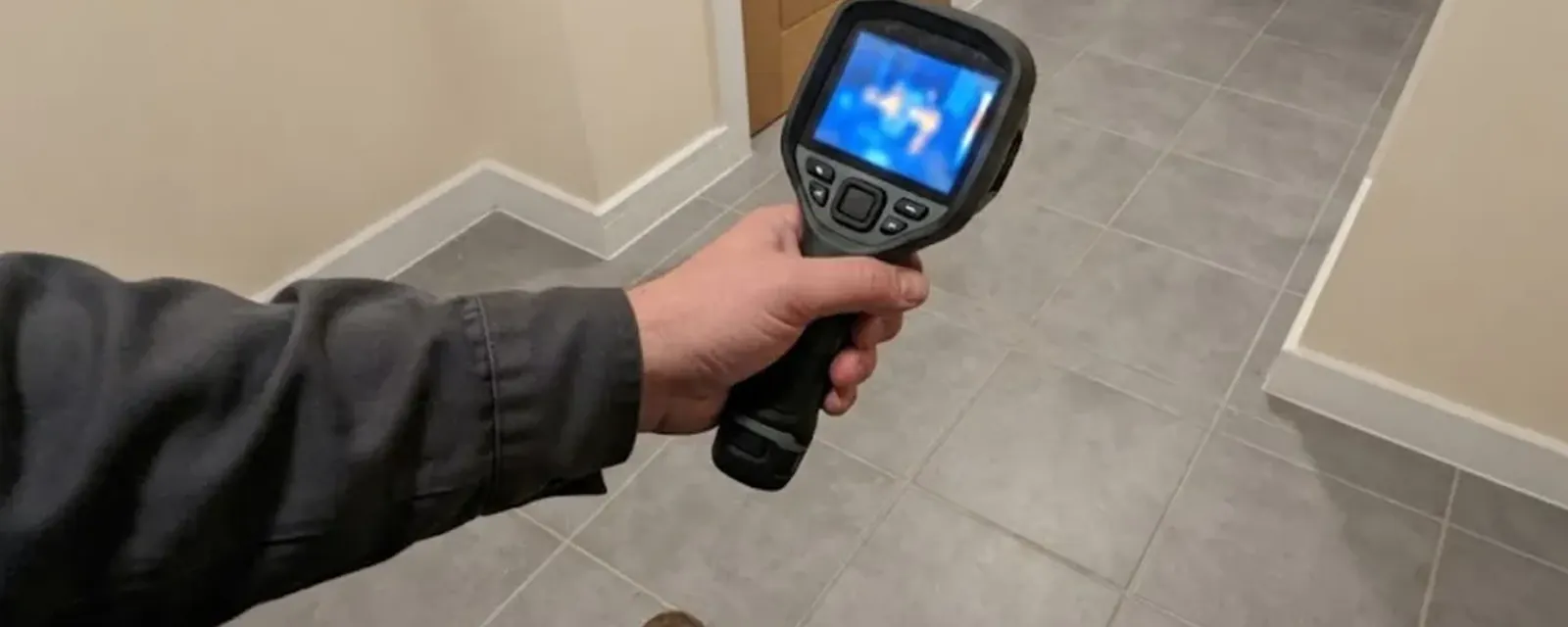
What is actually buried under your floor
When a house is built on a concrete slab, the drain and waste lines are laid in the ground before the concrete is poured. Those pipes carry everything from the toilets, tubs and sinks out to the sewer lateral. Depending on the home, hot and cold supply lines may also run through the slab or through the soil right beneath it.
Basement and lower-level floors work the same way in spirit. The slab of a basement floor sits on prepared ground, and the pipes that serve a lower bathroom, a laundry or a floor drain are often embedded in or just under it. Anything poured into concrete is meant to be permanent, which is exactly why a failure there is such a headache.
Not every Millbrae house has this setup. Homes here sit on slabs, on raised foundations with a crawl space, or on a mix of both after additions and remodels. The only way to know what is under your floor is to look at the house itself, so this guide stays general about foundations and focuses on what is true wherever pipes are buried.
Signs that a buried pipe is in trouble
Buried leaks do not drip into a bucket. They leak into soil or under concrete, and the evidence shows up somewhere else. The signs are usually subtle at first, then hard to ignore.
A water bill that creeps up
If usage climbs and your habits have not changed, water is going somewhere. A buried supply line can leak for weeks before anything is visible inside the house.
A running meter with everything off
Shut off every tap and appliance, then check whether the meter dial still moves. A moving dial points to a leak somewhere between the meter and the fixtures, including under the floor.
Warm spots on the floor
A hot water line leaking under a slab can warm the concrete directly above it. Bare feet find it before eyes do, especially in a hallway or a kitchen.
Damp flooring or a musty smell
Wood, laminate or carpet that buckles, cups or smells earthy is telling you moisture is rising from below. Baseboards that swell or stain are another clue.
The sound of running water
A faint hiss or trickle in a quiet house, with no tap open, usually means a pressurized line is losing water.
One sign alone can have an innocent explanation. A toilet that runs, an irrigation timer or a drippy outdoor tap can all spin a meter. Two or three signs together are a good reason to stop guessing and have the line tested.
Why slab and floor plumbing fails
Pipes under a floor get little attention for decades, then fail for ordinary reasons. Understanding the cause matters because it decides whether you need a small repair or a bigger plan.
Age and corrosion
Older metal supply lines can thin and pit from the inside or the outside. Pinhole leaks tend to appear in clusters, so a first repair often leads to another one a few feet away. When that pattern shows up, repiping part of the system can make more sense than chasing leaks.
Movement and settling
Concrete and soil shift slightly over time. A pipe that passes through a slab edge or sits tight against concrete can rub, crack or separate at a joint.
Drain line damage
Drain lines under the floor can crack, sag or separate, and roots can find any gap. Water then leaks out of the pipe, or soil and roots move in. Gurgling drains, slow drainage in several fixtures at once, or a sewer smell inside the house point toward the drain side rather than the supply side.
Finding the leak without tearing up the floor
The good news is that nobody should start with a jackhammer. Modern leak detection narrows a problem down to a small area first, and that keeps repairs smaller and cheaper in the end.
Confirm there is a leak
We check the meter, shut off fixtures and test pressure to confirm water is actually escaping. This separates a real leak from a running toilet or a slow irrigation drip.
Pinpoint the location
Acoustic listening gear and other detection tools follow the sound or the heat of the leak to a specific spot. For a drain line, a camera can run through the pipe to show cracks, offsets and roots.
Choose the repair route
Options range from opening a small section of floor, to rerouting the line through walls or the attic, to replacing the run. We explain the trade-offs on the spot so you can decide with the facts in front of you.
If the problem turns out to be the drain side, a camera inspection gives a clear picture before anyone digs. You can read more about how we trace hidden water on our leak detection page.
Repair options, compared
There is no single right fix for a buried leak. The best choice depends on where the pipe is, how many leaks it has had and what is on top of it.
| Approach | Best for | Trade-off |
|---|---|---|
| Spot repair through the floor | One clear leak in an accessible spot | Opens a section of flooring and concrete, but fixes only that point |
| Reroute through walls or attic | A supply line that keeps leaking under the slab | Leaves the old pipe abandoned, and some wall and ceiling access is needed |
| Replace the buried run | A drain line that has failed or collapsed | The most disruption up front, the longest-lasting result |
| Repipe the system | Several leaks in the same aged pipe | Bigger project, and it removes the repeat risk |
Because slabs are heavy and floors are finished, the cleanup after a repair matters as much as the plumbing. Ask about flooring, patching and moisture drying before any work begins.
What Millbrae owners should know
Millbrae homes and what is under them
Millbrae is an established city, not a new subdivision. Census figures show that more than four in ten of its homes were built before 1960, and a typical house here dates from the mid-twentieth century. Houses of that age have had decades for buried pipes to wear, so floor leaks and failing drain runs are more plausible here than in a newly built area.
The city also treats the sewer lateral seriously. Under the Millbrae Municipal Code, a bathroom remodel that adds fixtures or alters more than 25 percent of a building's area needs a camera inspection of the sewer lateral before the building permit is issued. Pass criteria include no roots, tight joints and a backwater valve, and defects must be repaired within 90 days. If you plan work over a slab, expect the lateral to be looked at.
Close to the Bay and the station area, some properties sit in flood hazard zones, according to the city's hazard planning. Water that stays in the ground after storms can mimic a floor leak, so a plumber should separate drainage trouble from a pressure leak before anything is cut open.
Should you handle any of this yourself
Some steps are yours to take and some are not. The cheapest and safest first move is information, not demolition.
DIY or what people try
- Reading the meter with all fixtures off to see whether it moves
- Shutting off the main valve when you suspect a leak
- Checking toilets for a silent leak with a few drops of food coloring in the tank
- Waiting a few weeks to see whether the bill drops by itself
Professional approach
- Pressure testing to isolate supply lines from drains
- Using listening gear and thermal tools to mark the leak location
- Running a camera through drain lines to see inside the pipe
- Opening only the section of floor that needs to be opened
Concrete work, permits and pressurized lines are not good DIY territory. If you do decide to hire anyone, confirm that the plumbing contractor holds a California C-36 licence using the CSLB lookup, and remember that work needing a permit falls outside the small minor-work exemption.
Before you call
If you suspect a leak under the floor, shut off the main water valve, keep electrical items away from wet floors and move belongings out of the damp zone. Do not drill, cut or break concrete to look for it. A gas smell is a different problem: leave the building, call 911 and your gas utility, and call us only after you are safe.
Once the water is off, the team can work out what happened. For a confirmed slab leak, our slab leak repair crews can walk through the options with you, and if you are not sure yet, we begin by tracing the source with a hidden-water test. We work in Millbrae and the neighboring towns, including Burlingame, and the full list of cities is on our service area page. Call the 24/7 line for a clear price before work starts.
Not sure where the water is going?
Describe the signs you are seeing and we will tell you whether it sounds like a buried line, a fixture or a drainage problem.
Common signs are a rising water bill, a meter that moves with everything off, warm patches on the floor, damp flooring and the sound of water in a quiet house. Several signs together justify a professional leak test.
Water that keeps flowing under or beside concrete can wash away soil and soften the ground beneath it. Fixing the leak early limits that risk, which is why acting on the first signs is wise.
Not always. Detection first narrows the problem to a small area, and some supply leaks can be rerouted through walls or the attic. A damaged drain line often needs the section opened.
Coverage depends entirely on your policy and the cause of the leak, so read the policy or ask your insurer before work starts. We can document what we find in a plain written summary.
Pipes that have been buried for many decades can corrode, crack or shift, so yes, age is a leading cause. The pattern of repeat leaks often tells us whether to patch or repipe.
The city's code requires a camera inspection of the sewer lateral before a building permit that adds fixtures or alters more than 25 percent of the building area. Check with the Millbrae Building Division about your specific project.
Sources and standards: The California Plumbing Code (based on the Uniform Plumbing Code). Millbrae Municipal Code chapter 8.20 on sewer laterals. The Millbrae 2040 General Plan hazard chapter.