If you suspect a leak under the floor, shut off the main water valve first. The line is open 24/7, so call as soon as the water is off. Then stay off wet floors near outlets or appliances, move rugs and boxes off the damp area, and leave the main valve closed until we have a plan.
A slab leak is a leak in a pressurized water line that runs in or beneath a concrete slab. Because the pipe is buried, the first clue is usually indirect: a warm spot on the floor, the sound of running water with everything off, a water meter that keeps turning, or damp carpet along a wall.
When a slab leak is an emergency
Not every slab leak floods the house on day one, but the water has to go somewhere. It saturates the soil under the slab, wets the base of walls, lifts flooring, and feeds mold. A small leak you ignore for a few weeks can become a much bigger repair.
Treat it as urgent right now if you see any of these:
- Water pooling or seeping up through the floor, a baseboard, or a slab crack
- A hot spot on the floor you can feel through your shoes, which points to a hot water line
- The meter dial or low-flow indicator moving with every fixture off
- A sudden drop in water pressure at several fixtures at once
- The sound of rushing or hissing water coming from the floor or a wall
We take after-hours calls for exactly this. A leak that starts at night can soak flooring by morning, so closing the main and calling the same night is the right order.
Signs the leak is under the slab
Warm or hot floor spots
A hot water line leaking into the slab heats the concrete above it. The warm patch usually follows the pipe route, which helps us narrow the search.
A meter that never stops
With every fixture and appliance off, a moving meter means water is escaping somewhere. A slab leak is one of several possible sources, so we rule out toilets and outdoor lines first.
Damp or buckling flooring
Wood floors cup, laminate lifts, tile grout darkens, and carpet stays damp along one wall. The pattern often leads back to the leak.
Sound and smell
Hissing at night, or a musty odor that returns after you clean, can point to water that has been feeding the floor for a while.
How we find and fix a slab leak
Shut off and confirm
We confirm the main is closed, check the meter for movement, and rule out a toilet, a water heater, or an outdoor line as the source.
Locate before cutting
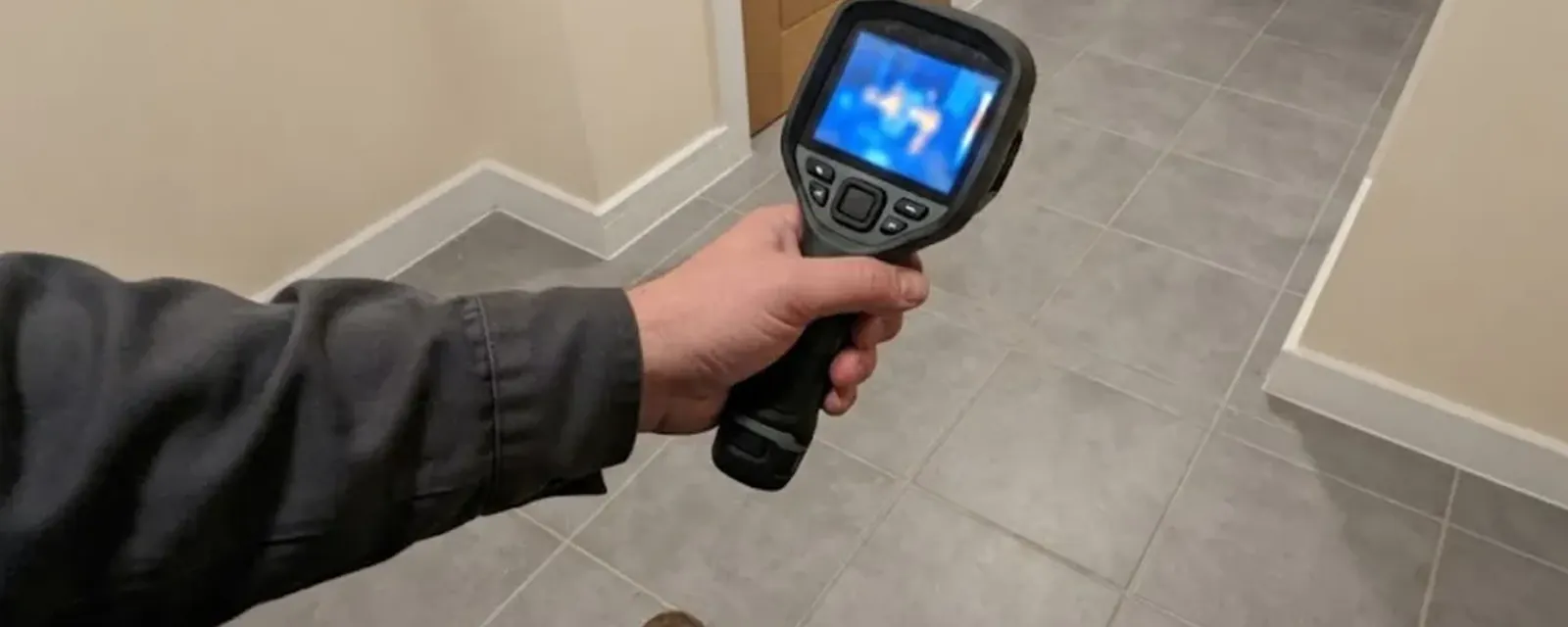
Acoustic listening and thermal tools pinpoint the leak. Cutting blind is how a small repair turns into a large patch, so we mark the spot first.
Explain the options
We lay out a spot repair through the slab, a reroute of the line through walls or attic, or a repipe of the affected section. You see the tradeoffs before choosing.
Repair and test
After the repair we pressure test the line, restore water, and check the meter again to confirm the leak is gone.
Close out the floor
We tell you what finish work comes next and which drying and flooring steps to line up with your insurance or contractor.
Local conditions that affect slab plumbing in Millbrae
Millbrae specifics for floor leaks
All of Millbrae's drinking water comes from the San Francisco Regional Water System, delivered through 11 pressure zones. Pressure differs from one zone to the next, and a line that runs at higher pressure works harder against every weak spot. If you have a slab leak and strong pressure at your taps, a pressure check on the house side is worth doing while we have the line open.
The ground matters too. The San Andreas Fault lies within a mile of Millbrae's western city limits, and the city's own hazard planning identifies landslide and liquefaction zones inside the city. Ground movement can stress buried lines, but we cannot tell you which streets are affected, so we judge each house by the leak we find, not by the map.
Housing age also plays a part. A large share of Millbrae's homes were built around the 1950s, so the original supply lines under or around the floor may be old. If we find one leak in an aged line, we tell you honestly whether more are likely and whether a repipe makes more sense than another patch.
Spot repair, reroute, or repipe
| Option | Best when | Tradeoff |
|---|---|---|
| Spot repair through the slab | One leak in an otherwise sound line | Cuts and patches concrete in one spot |
| Reroute through walls or attic | Leak is in a hard-to-reach section or pipe is failing | New pipe is exposed but keeps the floor intact |
| Repipe the affected section | Multiple leaks or corroded pipe | Higher upfront cost, fewer repeat visits |
| Monitor and mark | Leak is tiny and a repair is scheduled | Water keeps running, so this is a short bridge only |
We do not push the bigger option. If a spot repair solves it, we do that. If the pipe is clearly worn out, we show you why a reroute or repiping job is the better use of your money.
What affects the cost of a slab leak repair
What shapes a slab leak price
Slab leak work varies more than most plumbing jobs, so we price after we find the leak.
Leak location
under a kitchen island or a tiled hallway costs more than a bare garage slab.
Repair path
spot repair, reroute, or repipe change materials and labor.
Pipe material and age
older lines tend to need more than one fix.
Floor finish
tile, wood, and carpet each need different removal and replacement.
Permit and inspection
bigger repairs may need permits, and the Millbrae Building Division handles plumbing permits.
Call the 24/7 line for a clear price before work starts. Many homeowner policies cover sudden water damage but not the pipe repair itself, so ask your insurer what they need from us.
Hear water running under the floor?
Close the main valve and call the 24/7 line. We will arrive with the tools to find the leak before anyone opens the slab.
Related leak and pipe problems
A slab leak is one version of a hidden leak, and our leak detection service handles leaks behind walls, in crawlspaces, and under floors. If the leak sits between the street and the house instead, see water service line repair for how we handle buried lines.
When one leak turns up in an old line, the next question is usually how many more are coming. That is where a larger pipe replacement comes in, and it is worth a conversation before you pay for a second patch. We cover the Burlingame side of the border from the same office, so see our Burlingame emergency page if the property is there.
Questions about slab leaks
Yes, the line is open 24/7. Call, close the main valve, and keep people away from wet electrical areas. We schedule the first available visit and give you a clear price before work starts.
Warm floor spots, a moving meter with everything off, and damp flooring in one area are the usual signs. We rule out toilets and outdoor lines first, then locate the leak with listening and thermal tools.
Not always. A reroute through the walls or attic avoids the slab entirely. When a spot repair is the best answer, we cut a small opening only after we have pinpointed the leak.
Keep the main valve closed if you can. If you must run water, do it briefly and stay out of the damp area. Never run a fixture that sits on a wet floor near outlets.
Policies differ. Many cover sudden water damage but not the pipe repair, and some limit coverage for gradual leaks. Check with your insurer, and we will document what we found so your claim has clear paperwork.
Permits may apply, and the Millbrae Building Division handles plumbing permits. Larger repairs and reroutes are more likely to need one. We tell you what applies once we know the repair path.
It can. Water service lines run underground from the meter to the house, and a leak there looks a lot like a slab leak. We check the meter and the line before deciding where to dig.
Not always. A single failure in a good line can stay isolated. A second leak in aging pipe is common, so we tell you what we see in the line and let you decide between a patch and a larger fix.
Sources and standards: The California Plumbing Code (based on the Uniform Plumbing Code). The City of Millbrae Public Works water pages. USA North 811.