The short answer
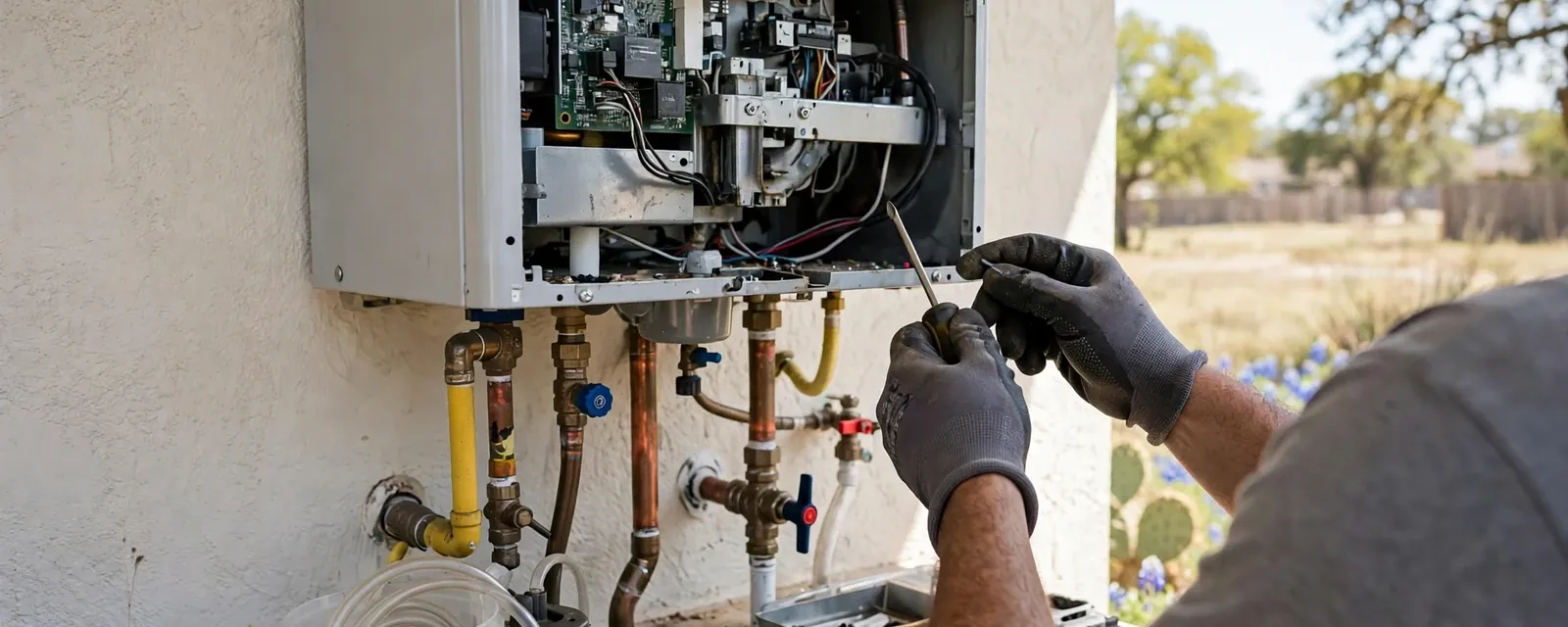
A tankless water heater, sometimes called an on-demand heater, heats water as it flows through the unit. There is no large tank of stored hot water waiting for you. When you open a hot tap, water enters the unit, a burner or electric element switches on, and the water leaves hot a few moments later.
A conventional tank heater works the opposite way. It keeps a large volume of water hot around the clock so it is ready when you need it, and it reheats whenever the temperature drops. That standing storage is the main thing a tankless system removes.
The practical result is a smaller unit that hangs on a wall and a heater that is not working while nobody is using hot water. It is also a different machine with different limits, which is why the details below are worth reading before you decide.
How it works from tap to heat
When flow is detected, a sensor tells the unit to fire. A gas model lights a burner and passes combustion heat through a heat exchanger that the water flows through. An electric model sends power to heating elements instead. Either way, a controller watches the temperature and adjusts so the outlet water stays near your setting.
You open a hot tap
Water starts moving through the unit and a flow sensor wakes it up. If the flow is too low, many units will not fire at all.
The unit heats the water
A gas burner or electric elements raise the temperature in seconds. The more water you ask for and the colder it is, the harder the unit has to work.
Hot water leaves the unit
Water travels to the fixture through your pipes. You still wait for the cold water in the pipe to clear, so tankless does not remove that delay on its own.
That last point surprises people. A tankless heater does not make hot water arrive instantly at a faraway tap. It only changes how the water is heated at the source, and a different set of fixes, which we cover on the installation side, deals with long waits at the tap.
Where tankless shines and where it falls short
| Factor | Tankless | Tank heater |
|---|---|---|
| Space | Small wall-mounted unit | Takes floor space for a tank |
| Standby heating | None, heats on demand | Keeps water hot all day |
| Supply of hot water | Steady as long as demand fits the rating | Limited by tank size, then a recovery wait |
| Install complexity | Often needs gas line, vent or circuit upgrades | Usually a simpler swap |
| Upkeep | Needs periodic descaling | Needs periodic flushing and anode checks |
| Several fixtures at once | Can struggle if demand exceeds the rating | Handles a short burst from stored water |
The honest summary is that tankless suits households that want a small footprint and a steady supply, and a tank can suit a household with brief heavy bursts. Neither is wrong. The question is what your house and your habits ask of the heater.
Gas or electric
Fuel is the biggest practical decision. Gas tankless units can deliver a high flow for a whole house, but they need a gas line that can feed them and a vent that carries exhaust outside. Electric tankless units avoid venting, but large ones draw heavy current, so the panel and wiring have to support them.
Smaller electric units are a common choice for a single fixture, and a whole-house electric tankless needs serious electrical capacity. Older panels may not have it, which is where a plumber and an electrician sometimes have to compare notes.
If you have a gas tank heater today and are curious about electric, the switch involves more than swapping the unit. Gas lines get capped, and new circuits get run. It is worth planning as a project, not an impulse.
Sizing: flow rate and temperature rise
Tankless units are rated by how many gallons per minute they can heat and by how much they can raise the temperature. Two numbers decide whether a unit is the right size: how much hot water you run at the same time, and how cold your incoming water is.
A shower and a dishwasher running together ask for more than either one alone. Add a second shower and a laundry cycle and the total climbs again. A unit that is too small will deliver lukewarm water when several things run at once, which is the most common complaint after a poor sizing job.
Sizing is also why a rated flow on a box is not enough. We add up the fixtures you realistically use together and compare that to the unit's output at your water temperature. When the numbers are close, we usually step up a size.
The cold water sandwich
When you turn the tap off and on again quickly, a small slug of cold water can reach the tap between two bursts of hot. This is a normal behavior in many tankless systems, and a short pause between uses or a different unit setting can reduce it.
What Millbrae water means for a tankless heater
Hardness and chloramine
Millbrae's drinking water comes from the San Francisco regional system and is treated with chloramine. In the city's 2025 water quality report, hardness ran from about 8 to 112 parts per million and averaged 62. That is relatively soft by common scales, so heavy scale buildup is less of a worry than in very hard water areas, but it is not zero.
A tankless heater has narrow passages inside, and any mineral deposit that forms there can reduce flow and efficiency over time. Periodic descaling keeps those passages clear. Ask us how often it suits your usage, and what the maker of your unit recommends.
Bay Area rules on new water heaters are also changing, and tankless units are part of that conversation. If you are replacing a heater in Millbrae, ask us what applies to your replacement before you buy a unit, so you do not end up with a model that no longer fits the rules.
When tankless is a good idea and when it is not
Reasons people hesitate
- A small house where space on the floor is not a problem
- An older panel that cannot support a large electric unit
- Heavy simultaneous demand beyond a single unit's output
- A budget that cannot cover gas, vent or electrical changes
Reasons people switch
- A wish to free up floor space in a closet or garage
- A household that uses steady hot water over long stretches
- A tank that is failing and needs replacing anyway
- Interest in a newer, more efficient system
If you are not sure which column you fall into, that is a normal place to be. We would rather tell you a tank suits your home than sell you a system that is wrong for it.
Taking the next step
The best next move is a conversation about your house, not a purchase. Tell us your fuel, how many bathrooms you have, how many people use hot water at the same time and where the current heater sits. Those four details tell us most of what we need.
From there, our tankless water heater team can explain what a switch would involve for your home, and our water heater installation crew handles the swap itself. We serve Millbrae, the neighboring city of Burlingame and the other towns on our service area page. Call the 24/7 line for a clear price before work starts.
It gives hot water continuously as long as your demand stays within the unit's flow rating. It does not store water, so it will not run out the way a tank can, but running too many fixtures at once can overwhelm it.
It can be, especially if you want the wall space or have predictable use. A smaller household may also get by with a smaller unit, which keeps the upfront work simpler.
Rarely as a like-for-like swap. Gas models often need a different vent and sometimes a larger gas line, and electric ones may need a new circuit, so we check the setup first.
Yes. Minerals can collect inside, so periodic descaling and filter cleaning matter, and the schedule depends on your water and how much you use the unit.
Most units need electricity for the controls and ignition, even gas ones, so hot water usually stops when the power goes out. A backup power plan or a tank can matter if that worries you.
The city's latest report shows hardness averaging 62 parts per million, which is on the soft side. Deposits can still form over time, so periodic descaling is worth planning for any tankless unit here.
Sources and standards: The California Plumbing Code (based on the Uniform Plumbing Code). The City of Millbrae 2025 Water Quality Report.