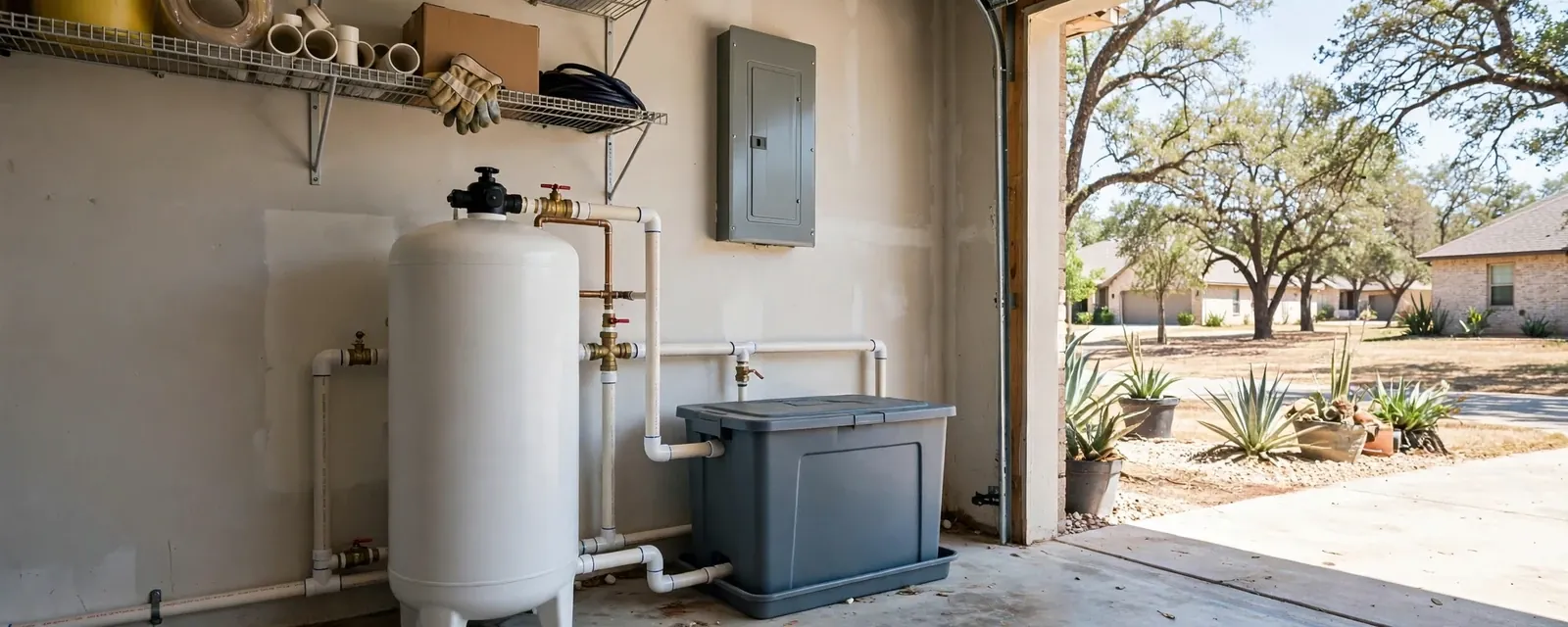
A whole-house filter is a set of cartridge housings plumbed into the main water line right after the shutoff. Everything the home uses passes through it first: the kitchen tap, the showers, the washing machine, the water heater. That position is the whole point, and it is also what makes the installation a real plumbing job rather than a countertop gadget.
This guide is about the cartridge side of the system: what the sediment stage does, what the carbon stage does, how housings are laid out, and what to check before you buy. It is written for Millbrae homes specifically, because the water that arrives here changes which parts of a system matter most.
What a cartridge housing actually does
Each housing is a pressure vessel with a removable sump. Inside the sump sits a cartridge, and water is pushed from the outside of the cartridge toward the center core, leaving particles behind. The cartridge is the consumable part. The housing, the fittings and the valves are meant to stay in place for years.
Most whole-house setups use two or three housings in a row. The first holds a sediment cartridge that catches grit, rust flakes and scale. The second holds carbon, which reduces chlorine-type tastes and odors. A third housing, when present, is usually a finer sediment stage or a specialty cartridge for a specific complaint.
Sediment stage
A pleated or wound cartridge that stops sand, rust and pipe scale. It protects everything downstream, including the carbon block, from clogging early.
Carbon stage
A carbon block or granular carbon cartridge that works on taste and odor. It needs enough contact time with the water, so the cartridge length and the flow rate matter.
Housing and sump
The pressure-holding body. Look at the O-ring seat, the pressure-relief button and the wrench fit, because those are what you deal with at every cartridge change.
Bypass and shutoffs
Valves on each side let you isolate the filter and keep water running to the house during a change. Skipping them is the most common regret we hear about from DIY installs.
Why sediment is the first problem to solve
Sediment is the stage that does the most visible work. Particles in a home come from the pipes, the water heater and any street work that stirs up the main, not only from the water source. A sediment cartridge turning brown or gray in a few weeks tells you something is shedding inside the system.
The micron number on a cartridge is the size of particle it is built to catch. A coarse cartridge passes more flow and lasts longer but lets finer silt through. A fine one catches more but clogs faster and costs you pressure. Many homes do best with a coarse cartridge first and a finer one second, so the fine stage is not doing all the work alone.
Pressure drop and flow: the part people skip
Every cartridge adds resistance. When a cartridge is new, you barely notice. When it is loaded, the shower weakens, the washing machine fills slowly, and a tankless water heater may complain about low flow.
Size the housings for the peak demand in the house, not the average. A home with two full bathrooms running while the dishwasher fills needs a larger housing and cartridge surface than a one-bath condo. Ask for the flow figure on the cartridge you are quoted and compare it to how many fixtures can run at the same time.
Millbrae water: what the cartridges are really up against
Hetch Hetchy supply and the chloramine question
Millbrae buys 100 percent of its water from the San Francisco Public Utilities Commission, and the 2025 Millbrae water quality report notes that the Hetch Hetchy portion is exempt from filtration requirements. That is why most cartridge stages here are about the pipes inside your home and the taste of the disinfectant, not about cleaning up a raw source. Sediment that fills a cartridge usually came from your plumbing or from disturbance in the main.
The same report shows the water is disinfected with chloramine, with residual levels reported between 0.6 and 3.8 parts per million. Chloramine is harder for plain carbon to remove than free chlorine, so a carbon cartridge for chloramine needs to be a catalytic or high-contact type with enough length and a modest flow rate. If a quote simply says "carbon filter" and nothing else, ask which kind.
Homes in Millbrae are also not new. The median house is commonly listed as built in the late 1950s, so older supply piping is common inside the walls. Older pipe can shed scale when a valve is turned, which is why a sediment stage at the main earns its place.
We cannot tell you what your pipes are made of from a map, and we do not guess. A look at the main and the first few feet of pipe tells us more than any statistic.
Housing layout and where it goes
The filter belongs after the main shutoff and before the first branch, so everything is covered. It also needs enough free space to pull the sump down and set it aside, and that clearance is often what decides the location. Allow room beneath the housing equal to the sump length plus a few inches for your hand and the wrench.
The mounting surface matters. A full housing is heavy, and the weight is hanging off a wall. Studs or a backing board, a proper bracket and flexible or rigid fittings that do not stress the connections are all part of a clean install. If the location is outdoors, think about sun and freezing, since cold nights can crack a water-filled housing.
| Setup | Best for | Watch out for |
|---|---|---|
| One sediment housing | Light grit, older pipes, protecting appliances | Does not touch taste or odor |
| Sediment plus carbon | Most single-family homes | Carbon type must suit chloramine |
| Fine sediment, coarse sediment, carbon | Homes with heavy particle loads | Pressure loss and larger footprint |
| Single large housing | Tight spaces, low demand | Fewer stages, more compromises |
What you can do yourself and what you should not
Changing a cartridge is a task most homeowners can do. You close the shutoffs, press the relief button, unscrew the sump, drop in a new cartridge, check the O-ring and restart the water slowly. Keep a spare set on hand so a clogged cartridge never becomes a waiting game.
Installing the housings is different. It involves cutting into the main line, soldering or crimping or push-fitting new connections, adding a bypass, and making sure the work is tested for leaks under full pressure. That is plumbing work, and it may need a permit, since the Millbrae Building Division handles plumbing permits. If someone offers to do it for cash and no paperwork, be cautious.
What people try
- Dropping a single cartridge into a housing at the kitchen only
- Buying a bundle online and fitting it without a bypass
- Skipping the pressure-relief step before unscrewing the sump
- Installing in a spot where the sump cannot be removed
Professional approach
- Matching cartridge types to the water and the household demand
- Fitting isolation valves and a bypass on both sides
- Bracing the housings and testing under line pressure
- Leaving clear space and labeling the cartridge schedule
Keeping the system working
A filter is only as good as its change schedule. Sediment cartridges loaded with grit slow flow and can start to release what they caught. A good habit is to note the install date on the housing, check the pressure at a hose bib or shower every month, and replace when flow drops, not only on a calendar.
Carbon cartridges lose effect gradually. When the taste or smell returns, the carbon is done, even if the flow is fine. Unlike sediment, you cannot tell by looking, so plan on a routine change.
Where a plumber fits in
If you want a system sized to the house and installed with proper valves, our water softener and filtration service covers whole-house filter selection, mounting and testing. When the filter is part of a bigger project, such as a remodel or a new water heater line, plumbing installation lets us rough in the connections at the same time.
We serve Millbrae homes and the neighboring towns, and our team can be reached any hour on the 24/7 line. If you live in the next town over, the Burlingame plumber page explains how coverage works there, and the service area page lists the rest of the area we cover.
Not sure which cartridge you need?
Call the 24/7 line and tell us what you see in the water: cloudy, brown flecks, a bleach-like smell. We will recommend a layout and give a clear price before work starts.
Some pressure drop is normal and grows as cartridges load with sediment. A properly sized system should keep showers and appliances working well. If the shower weakens a few weeks after a change, the cartridge or the sizing is the first thing to check.
Sediment cartridges change when flow drops, which can be every few months in dusty or older-pipe situations. Carbon cartridges change when taste or smell returns. Write the date on the housing so you can see the pattern instead of guessing.
Meeting standards at the city level does not cover your own pipes. Filters are mostly about particles from inside the home and about taste. If you are happy with your water, you can skip it, and we will say so.
Mounting a housing onto an existing valve setup is possible for a handy homeowner. Cutting into the main, adding a bypass and testing under pressure is plumbing work and may involve a permit. A leak at the main can flood a home quickly, so many people hire this out.
Plain carbon is weaker against chloramine than against free chlorine. A catalytic or high-contact carbon cartridge with a modest flow rate does better. Ask which type you are being offered, because the label alone will not tell you.
The City of Millbrae Public Works Department publishes an annual Consumer Confidence Report on the city website, with the 2025 edition covering disinfectant levels and hardness. Bring it to the quote conversation, and we will go through which readings actually affect cartridge choice.
Sources and standards: The City of Millbrae 2025 Water Quality Report. The San Francisco Public Utilities Commission. The California Plumbing Code (based on the Uniform Plumbing Code).